


Have you ever landed on a website and felt completely lost because it wasn't in your language? We’ve all been there. In a world that’s more connected than ever, language shouldn't be a barrier to great ideas and useful tools. This is where multilingual AI applications come in. They are changing how we connect, communicate, and do business across the globe.
Creating an app that speaks to everyone is a powerful way to expand your reach. This guide is your roadmap to create one with a AI app builder. We’ll walk through everything you need to know, from picking the right tools to navigating the complexities of language and culture. You’ll learn how to choose a platform, what features to look for, and how to create an experience that feels natural to users everywhere.
First Things First: What to Consider Before You Build
Jumping into development without a plan is like taking a road trip without a map. Before you start building your multilingual app, take a moment to think through a few important points. This will save you time and headaches later on.
First, know your audience. Which languages and regions are you aiming for? Understanding your target users will guide every decision you make, from language choices to cultural nuances. Next, decide on your approach. You could use simple translation, which swaps words one-for-one. Or, you could use native multilingual models that understand context and culture. Many find a hybrid approach works best.
Think about performance versus accuracy. real-time translation might be fast, but it could miss some of the subtleties. Highly accurate models might be slower. You’ll also want to consider costs and how your app will handle more users and languages over time. Finally, remember data privacy. Different regions have different rules, and you’ll need to make sure your app respects them all.
Must-Have Features for Your Multilingual App
To build an app that truly connects with a global audience, you need the right set of tools. Look for a builder that includes strong natural language processing (NLP). This is the technology that helps your app understand and respond to human language in a smart way.
Real-time translation and localization are also essential. This means your app can translate content on the fly and adapt things like dates, currencies, and images to fit local customs. For a more interactive experience, look for voice recognition and text-to-speech features in multiple languages.
Your app builder should also offer flexible API integrations. This lets you connect to powerful third-party services for translation or speech. Finally, make sure the platform has tools for localizing your user interface, making it easy to adapt buttons, menus, and layouts for different languages.
Your Toolkit: Top No-Code and Low-Code Platforms
You don’t need to be a coding expert to build a powerful multilingual app. No-code and low-code platforms give you the tools to bring your vision to life with visual editors and pre-built components.
Many platforms like Base44, Lovable and Bubble let you build complex web applications and connect to translation APIs. For mobile apps, FlutterFlow offers great internationalization support to help you reach a global audience. Adalo simplifies app creation with component libraries, while Glide lets you build apps from a simple spreadsheet and add translation functions.
Each platform has its own strengths. Bubble is incredibly flexible, FlutterFlow is great for mobile, Adalo is very user-friendly, and Glide is perfect for data-driven apps. Take some time to explore which one fits your project best.
Choosing the right platform for you
While the platforms mentioned are great starting points, what if you need something that combines flexibility, power, and ease of use? When choosing a platform, think about your project's specific needs. Consider factors like your technical comfort level, the complexity of your app, and whether you need to integrate with other tools, like AI services.
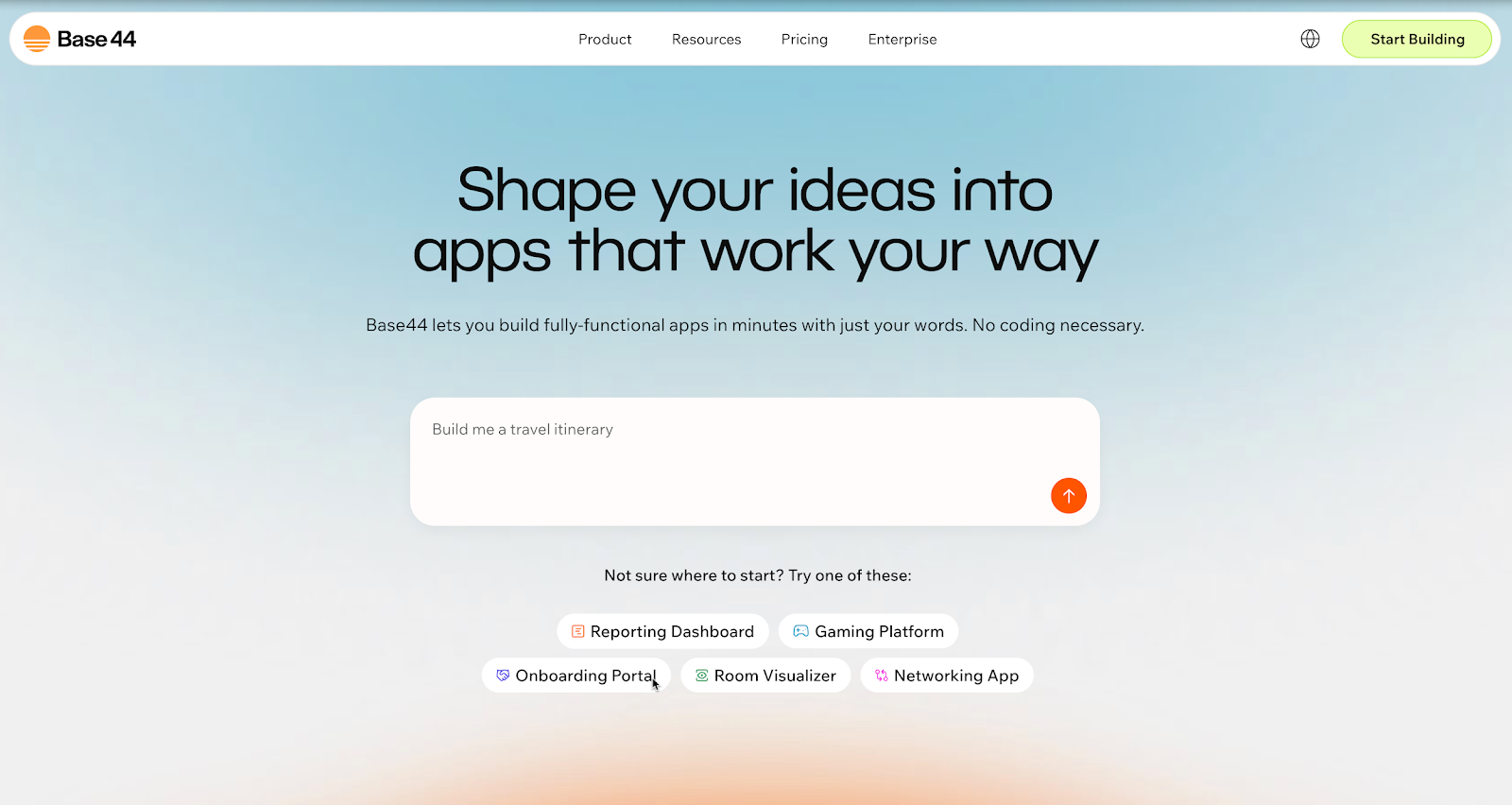
For ambitious projects, Base44 is a great option. It’s designed to help you build custom AI applications without writing complex code. You can create workflows tailored to your needs, integrate with leading AI language services, and manage different language versions of your content, all in one place.
Supercharge Your App with AI Development Platforms
For those who want to dig a little deeper, AI-powered development platforms offer incredible capabilities. You can integrate services from OpenAI GPT models or Anthropic Claude to add advanced multilingual understanding to your app.
Major cloud providers also offer powerful tool. The Google Cloud AI Platform has top-notch translation and speech APIs. Microsoft Azure AI provides a full suite of language and cognitive services, and Amazon Web Services (AWS) offers tools like Translate, Transcribe, and Polly for text and speech processing.
Specialized Frameworks for Language Tech
If your project is focused on conversational AI, specialized frameworks can give you a head start. Hugging Face provides a huge library of open-source models that you can adapt for your needs. Rasa is a popular choice for building sophisticated, multilingual chatbots.
Google’s Dialogflow is another excellent platform for creating voice and text interfaces that can communicate in many languages. For developers looking to add natural language understanding to their apps, Wit.ai from Meta is another strong option.
Your Step-by-Step Guide to Building a Multilingual App
Ready to build? Here’s a simple path to follow.
-
Define Your Goal: Start by clearly outlining what your app will do and who it's for.
-
Pick Your Platform: Choose the right tool for the job. For maximum flexibility and ease, a platform like Base44 is an excellent choice.
-
Set Up Language Switching: Implement a way for users to easily select their preferred language.
-
Implement Translation: Connect to a translation API or use your platform’s built-in tools.
-
Handle Special Cases: Pay attention to languages that read from right to left, like Arabic or Hebrew, and ensure special characters display correctly.
-
Test, Test, Test: Test your app thoroughly across all target languages and regions.
-
Deploy and Monitor: Launch your app and keep an eye on performance and user feedback.
Best Practices to Keep in Mind
Building a great multilingual app is about more than just translation. Avoid literal, word-for-word translations, which can often sound unnatural or miss the point. Instead, focus on localization, which means adapting your content to fit the cultural context.
Be mindful of cultural sensitivities in your images, colors, and examples. Also, pay attention to how you manage context in translations to avoid confusion. Optimize your app's performance to ensure it runs smoothly, even with multiple language packs. A clear and easy-to-find language switcher is also a must for a good user experience.
Seeing It in Action: Case Studies
Imagine an e-commerce store that automatically displays products and prices in a visitor's local currency and language, leading to a huge boost in international sales. Or a customer support chatbot that can seamlessly assist users from dozens of different countries in their native tongue.
Think of an educational app that helps students learn new languages by interacting with AI-powered conversation partners. Or a healthcare application that provides real-time interpreter features to help doctors communicate with patients from diverse backgrounds. These are just a few examples of how multilingual AI is making a real-world impact.
What's Next in Language Tech?
The world of language technology is moving fast. Soon, we'll see AI that can recognize different dialects in real time and even preserve the emotion and tone of a speaker's voice across languages. Researchers are also working on better support for low-resource languages that have less data available.
We are also moving toward multimodal AI, where text, voice, and vision are combined for a richer understanding. And with edge computing, powerful multilingual features will soon be able to run directly on your device, even without an internet connection.
Your Journey Starts Now
Building a multilingual AI application might seem like a huge task, but with the right tools, it’s more achievable than ever. Platforms like Bubble, FlutterFlow, and specialized frameworks give you plenty of options. For those looking for the ideal balance of power and simplicity, a flexible builder like Base44 provides the perfect foundation to create something truly special.
The key is to start with a clear plan, choose the right platform for your needs, and focus on creating a thoughtful, culturally aware experience for your users. The world is waiting to hear what you have to say. Now you have the tools to speak its language.